


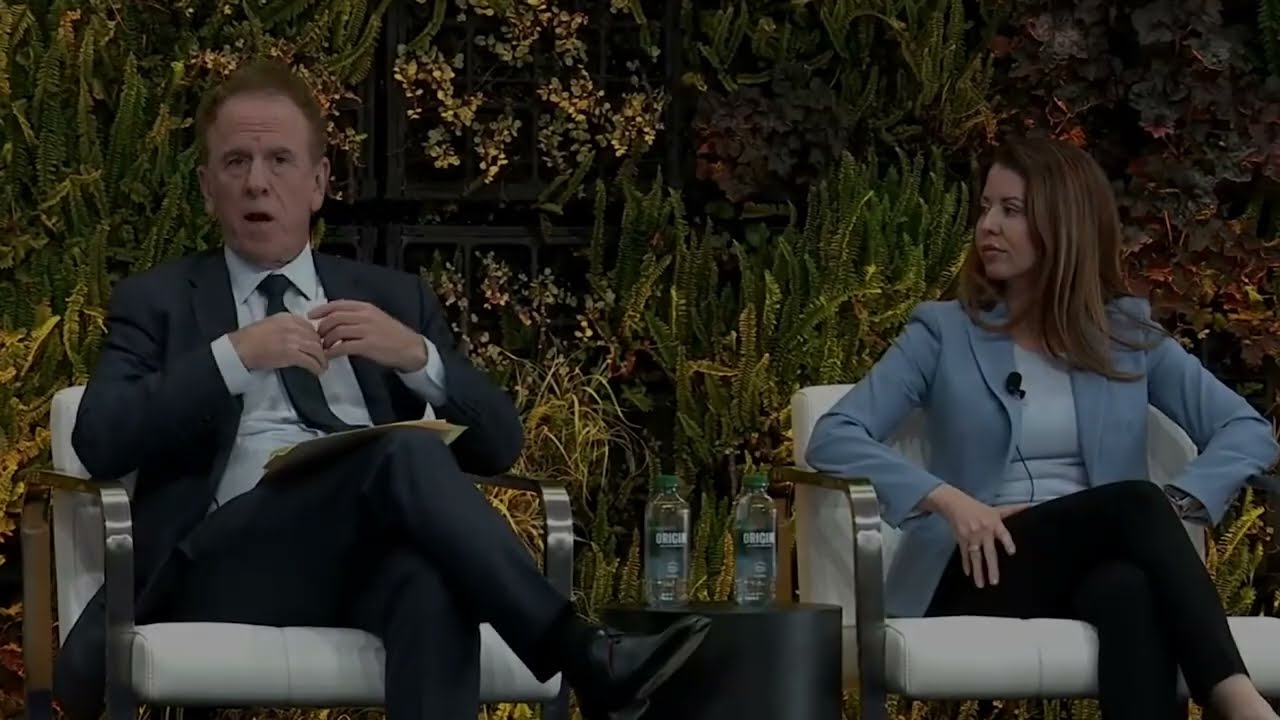
As someone who has long been fascinated by the unique legal challenges ESG presents, I was delighted to moderate the Milken Institute’s panel, “Do Investors Finally Understand ESG?” There, I joined five speakers who offered a global perspective on this issue, which, while handled differently the world over, impacts us all. The panel included State Street Corporation’s Executive Vice President, Jessica Donohue, Unison Capital’s Co-Founder and Partner Tatsuo Kawasaki, CalSTRS Portfolio Manager of Sustainable Investments and Stewardship Strategies Aeisha Mastagni, Global Head of Sustainable Fitch, Andrew Steel, and Eugenia Unanyants-Jackson, PGIM’s Global Head of ESG.
I threw open the conversation with a rather casual observation: according to Wikipedia, the term ESG first showed up in 2005. It’s nothing new: but do people really understand it? For the uninitiated, ESG—or Environmental, Social, and Governance—is a buzzword, but also kind of a catch-all that is often used to intentionally greenwash or obfuscate basic facts about a company. However, at core, ESG attempts to characterize investment risks from the materiality of the vicissitudes of climate change, and how to manage those risks and thrive in a changing world. ESG also points to the social benefit of investments and to a broader conception of human capital and environmental stewardship—what could loosely be called “doing good.”
Of course, these are two terrifically different concepts: one centers on a company’s self-interest and survival, while the other hinges on some notion of ethics and corporate responsibility, which, naturally, can help the bottom line. Those are two very different concepts that are often conflated: as the panelists discussed, we need to stop mixing these up.
Another pivotal point of discussion was the importance of establishing a kind of shared understanding or metrics so we can compare ESG outcomes. Presently, there is no agreed upon way of measuring ESG: in fact, there are 300 different rating agencies right now, which makes the space especially chaotic. But as our speakers discussed, the numbers of agencies isn’t the source of the confusion: it’s the need for transparency as to how each establishes their ratings so we can all understand where these metrics come from.
The need for data lay at the heart of most of our conversation. Not only do we need more data to establish a baseline understanding of ESG, we also need more data to get a sense of risk separate from benefits in order to compare different companies. Presently, it’s virtually impossible to assess risk exposure, as we don’t have good comparable information for private markets.
Another challenge of ESG is that it is self-reported, which means companies can pick and choose the data they share to create the most flattering picture to the public. With this lack of clarity and accountability, ESG is largely a vanity project for many companies to virtue signal doing good, rather than actually doing it. However, as imperfect as it presently is, our speakers had a number of insights into how we might move forward. For one, Andrew Steel of Sustainable Fitch has been building a framework that can provide a more detailed, granular way to measure. Several panelists agreed that blockchain could provide more transparency, as we could leave it up to AI to crunch the data and automatically score ESG without bias.
Of course, this type of innovation still lies in the future, but our panel wholeheartedly agreed that imperfect self-reporting is far better than uninformed guesses. It is better to take imperfect action now than wait for a better time. The time to act is now. Please watch our discussion below:
You can watch the full video on the Milken Institute’s website:
https://milkeninstitute.org/video/esg-do-investors-understand
 @jbqlaw